
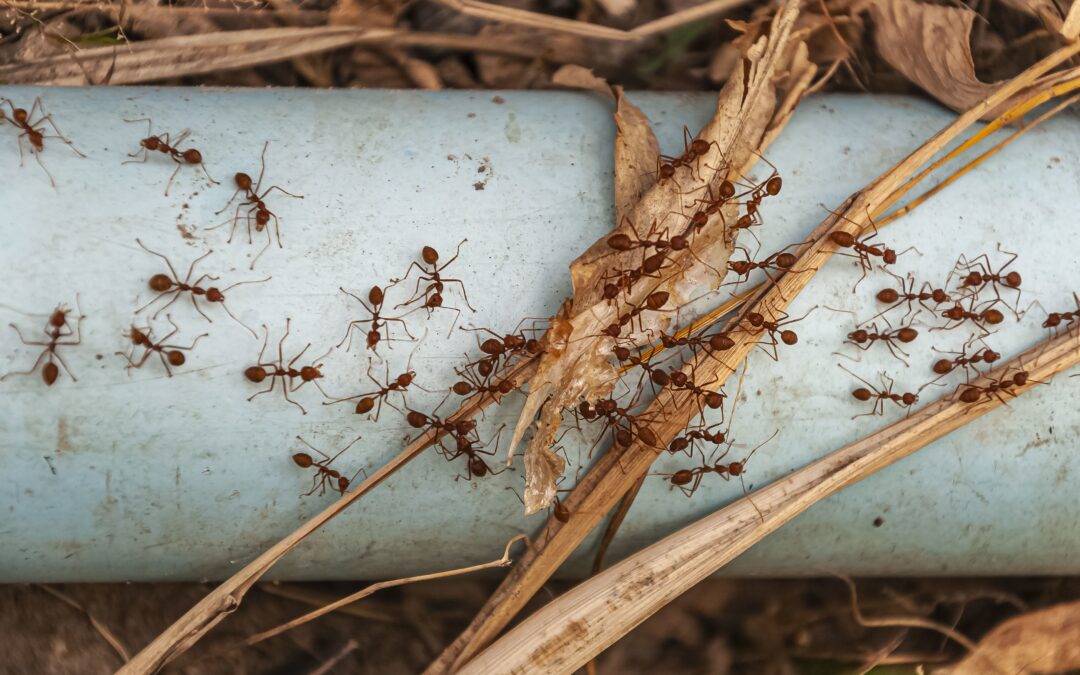
Summer is one of the busiest seasons for carpenter ants. If you’ve noticed large black ants
crawling around your home or found small piles of sawdust where they shouldn’t be, it may be
more than just a nuisance—it could be a sign of a carpenter ant infestation.
Unlike termites, carpenter ants don’t eat wood, but they excavate it to build their nests. Over
time, this can weaken wooden structures and lead to costly repairs if left untreated.
What Are Carpenter Ants?
Carpenter ants are among the largest ants you’ll see around your home. They are usually black,
but some species have reddish coloring. Winged carpenter ants, also called swarmers, are
often seen when they’re searching for a place to establish a new colony.
Because they prefer damp or decaying wood, they’re commonly found around homes with
moisture issues.
Signs You May Have a Carpenter Ant Nest
🐜 You’re Seeing Large Ants Indoors
A few ants may not seem alarming, but seeing large ants regularly—especially in kitchens,
bathrooms, or around windows—could indicate a nearby nest.
🪵 Small Piles of Sawdust
Carpenter ants remove wood as they tunnel through it. The leftover wood shavings, known as
frass, often collect beneath entry holes or damaged wood.
🔊 Rustling Sounds Inside Walls
As colonies grow, you may hear faint scratching or rustling noises inside walls or ceilings,
especially at night when ants are most active.
🏠 Hollow or Damaged Wood
Wood that sounds hollow when tapped or has smooth tunnels inside could be a sign of
carpenter ant activity.
Where Do Carpenter Ants Build Their Nests?
Carpenter ants love areas with moisture and wood. Check places like:
● Around windows and door frames
● Bathroom and kitchen walls
● Under sinks
● Around chimneys
● Wall voids
● Damp crawl spaces
● Firewood piles
● Tree stumps
● Wooden fences and sheds
● Areas where tree branches touch your roof
Why DIY Isn’t Always Enough
One of the biggest challenges with carpenter ants is that they often have multiple nests. A
main colony may exist outdoors while several satellite colonies are hidden inside your home.
Eliminating the ants you see doesn’t necessarily remove the entire infestation. Without locating
every active nest, the problem often returns.
How to Help Prevent Carpenter Ants
You can reduce your risk by:
● Repairing plumbing leaks promptly.
● Keeping gutters clean and directing water away from your home.
● Replacing rotting or water-damaged wood.
● Trimming tree branches away from the roof.
● Storing firewood away from the house.
● Sealing cracks and gaps around doors, windows, and utility openings.
Frequently Asked Questions About
Carpenter Ants
1. How do I know if I have carpenter ants or just regular ants?
Carpenter ants are much larger than common household ants and are usually black or
reddish-black. If you’re consistently seeing large ants indoors, especially around wood or
moisture, it’s a good idea to have your home inspected.
2. Do carpenter ants eat wood like termites?
No. Carpenter ants don’t eat wood—they excavate it to build their nests. However, over time,
this tunneling can still weaken wooden structures.
3. What attracts carpenter ants to my home?
Carpenter ants are attracted to:
● Moist or decaying wood
● Water leaks
● Standing water
● Food crumbs
● Sugary foods
● Pet food left out
● Tree branches touching the house
4. Where are carpenter ant nests usually found?
They commonly nest in:
● Bathrooms
● Kitchens
● Window and door frames
● Wall voids
● Crawl spaces
● Firewood piles
● Tree stumps
● Wooden fences
● Garages and sheds
5. Can carpenter ants damage my home?
Yes. While they don’t consume wood, carpenter ants excavate it to create galleries for their
colonies. Large infestations can eventually weaken structural wood if left untreated.
6. Are carpenter ants dangerous to people?
Carpenter ants are not known to spread diseases. They may bite if handled, but the primary
concern is the damage they can cause to wooden structures.
7. Why am I seeing winged carpenter ants?
Winged carpenter ants are reproductive ants looking to establish new colonies. Seeing them
indoors may indicate that a mature colony is already nearby.
8. Can I get rid of carpenter ants myself?
DIY sprays may kill the ants you see, but they usually don’t eliminate the hidden nest or satellite
colonies. Professional treatment is often the most effective solution.
9. Can carpenter ants come back after treatment?
Yes, they can if the conditions that attracted them—such as moisture, rotting wood, or easy
entry points—are not corrected. Professional treatment combined with preventive measures is
the best way to keep carpenter ants from returning.
10. How often should my home be inspected for carpenter ants?
Even if you haven’t noticed any signs, it’s a good idea to have your home inspected at least
once a year, especially if you have older wooden structures, recent water damage, or live in an
area where carpenter ants are common. Early detection can save you from costly repairs later.
11. How can I help prevent carpenter ants?
Simple prevention steps include:
● Repair leaks promptly
● Remove rotting wood
● Keep gutters clean
● Trim tree branches away from the home
● Seal cracks around windows and doors
● Store firewood away from your house
12. When should I call Queen B Pest Services?
If you’re seeing carpenter ants frequently, finding sawdust-like piles, hearing activity inside walls,
or noticing damaged wood, it’s time for a professional inspection before the infestation becomes
more serious.
Let Queen B Pest Services Help
Carpenter ants can quietly damage your home long before you realize there’s a problem. If you
suspect carpenter ants or simply want peace of mind, our experienced technicians are here to
help.
We’ll inspect your property, locate hidden nests, eliminate active colonies, and provide
recommendations to help prevent future infestations.
🐝 Protect Your Home Today!
At Queen B Pest Services, we’re committed to keeping your home pest-free all year long.
📞 Call us today: 410-989-1919
📧 Email: queenbpest@gmail.com
📍 Proudly serving Baltimore and surrounding Maryland communities.
Contact us today for your FREE estimate!