
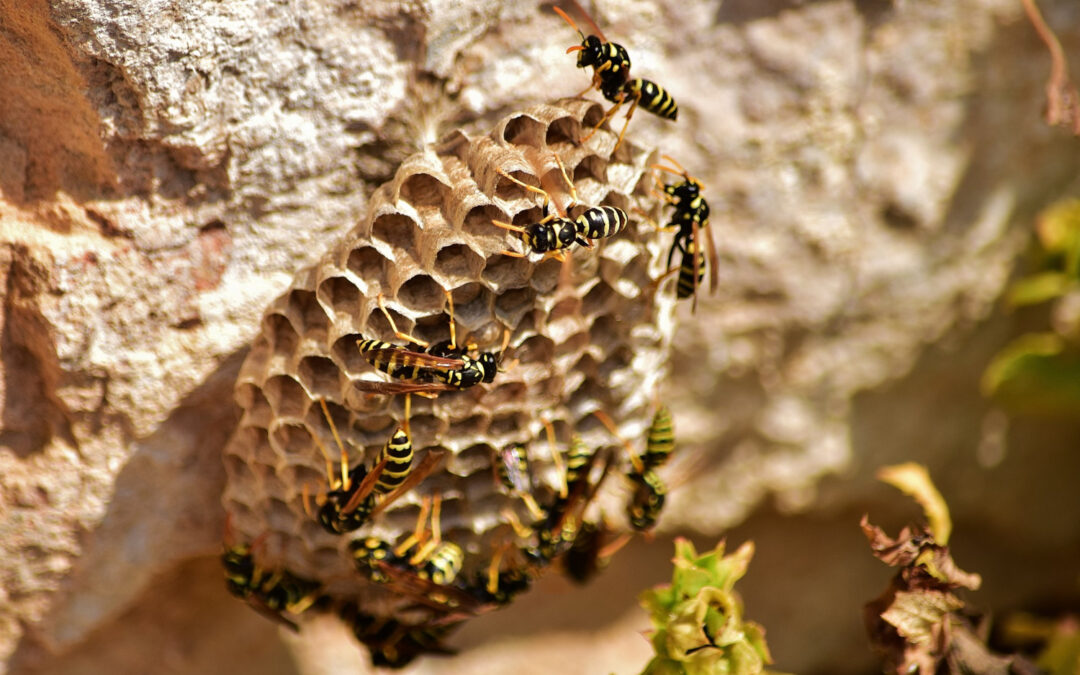
Most people, when they see a hornet flying around their house, their first reaction is to run or to swat it away. Hornets are known for their aggressiveness but really they are interesting insects and play an important role in the ecosystem. Recognizing their behavior can help you to stay safe and know when you need professional help.
What Is a Hornet?
Hornets are a member of the wasp family and are among the largest social wasps in the world.
They live in colonies with a queen, worker hornets and developing larvae. The colonies cooperate to build a nest , collect food , and protect the queen.
Unlike bees, hornets are smooth and have very little hair, so they are less efficient pollinators. Instead, they are skilled hunters that eat insects like flies, caterpillars, beetles and other pests.
The life of a hornet colony
The life cycle of a hornet colony is seasonal.
Spring
In early spring the fertilized queen emerges from her winter hibernation. She looks for a suitable place to build a nest and starts to build a tiny paper nest. The queen will lay the first batch of eggs, and feed the larvae until they develop into worker hornets.
Summer Time
When female worker hornets emerge, they are responsible for building the nest, collecting food and defending the colony. The nest expands quickly in this period and the population of the colony can reach into the hundreds.
Late summer and autumn
The colony is at its largest in late summer. New queens and males are produced for mating. Following copulation, the new queens find refuge to survive the winter, while the rest of the colony slowly dies out as temperatures drop.
Winter.
Most hornet colonies can’t survive the winter. Only the new fertilized queens are alive, hiding in protected areas until spring returns.
What Do Hornets Use to Make Their Nest?
Hornets are excellent builders. They chew weathered wood into tiny fibers, mix them with saliva and use them to build their nests. This creates a paper-like material that is lightweight and durable.
Their nests are usually enclosed and can be as small as a golf ball in the spring, and as large as a basketball, or larger, by late summer.
Typical nesting sites include:
● tree limbs
● Eaves of roof
● Attics
●Voids in walls
● Barns
● Garages & Buildings
● Bushes and shrubs
What Do Hornets Feed On?
Hornets have varying dietary needs at different stages of life.
Adult hornets mainly eat sugary substances. These include:
● Nectar from flowers
● Tree saps
● Fruit juice.
● Sweet drinks left outside
However, the developing larvae need protein. Worker hornets catch insects, chew them into a paste and feed it to the young. This hunting behavior helps to keep many garden pests down naturally.
Are Hornets Beneficial?
Hornets are considered a nuisance by many homeowners, but they do have many benefits to the environment.
They do help:
● Control populations of flies, caterpillars and other insect.
● Be natural predators to maintain the ecological balance.
● While feeding on nectar, contribute to pollination to a limited extent.
Because of these benefits, hornets should only be removed when they pose a threat to humans or property.
When do hornets become a danger?
Hornets can be dangerous when their nests are built near places where people live or work.
A nest located near a front door, playground, patio or walkway would increase the chance of accidental disturbance. When hornets are threatened, they release alarm pheromones to alert the rest of the colony to protect the nest. That can mean two or three hornets will attack you at once.
People who are allergic to insect venom are at the highest risk, because even one sting can cause a severe allergic reaction that requires immediate medical attention.
How to Prevent Hornet Stings If you see hornets on your property:
● Stay calm and don’t make any quick movements.
● Avoid all nests in plain view of children and pets.
● Do not throw anything at a nest or spray household chemicals on it.
● Do not mow or trim vegetation around an active nest.
● When you need to know where hornets are coming from or going to, watch them from a safe distance.
If people are not threatening their colony, most hornets will leave them alone.
How To Keep Hornets From Building A Nest?
Although it is not possible to get rid of all nesting opportunities, homeowners can reduce the chances of attracting hornets by:
Sealing exterior cracks and gaps in the home.
● Replacing broken siding and roof vents.
● Making sure garbage containers are tightly sealed.
● Cleaning up spilled food and sugary drinks outdoors.
● Cutting back overgrown foliage.
● Conducting regular inspections during the spring when nests are small.
One of the best ways to stop a small hornet problem from turning into a big infestation is early detection.
FAQs (Frequently Asked Questions)
1. How can I know if I have hornets or wasps?
Hornets are usually bigger than most wasps, and make paper nests that are closed, and football-shaped. If you are unsure, a professional can identify the species for you.
2. Do hornets have a higher level of aggression than bees?
Hornets are generally not aggressive unless their nest is disturbed. However, they can get very defensive and may sting multiple times to protect their colony.
3. Do hornets sting more than once?
Yes. Hornets can sting more than once as they do not lose their stinger like honey bees do.
4. Why are hornets coming to my property?
Hornets are attracted to food sources like insects, sugary drinks, ripe fruit, flowering plants, and accessible nesting sites such as trees, attics and roof eaves.
5. Can I safely remove a hornet nest myself?
No. Removing a hornet nest without proper protective equipment can be dangerous and provoke a swarm. It’s best to have it removed by a professional.
6. When do hornets become active?
Hornets are most active in spring and summer, and their colonies are at their largest in late summer and early fall.
7. Do hornets go back to the same nest every year?
No. Most hornet colonies die out in winter and the old nest is not reused. But if conditions are good, new queens might build nests nearby.
8. What if I find a nest of hornets?
Keep your distance, do not allow others to approach the area and contact a professional pest control company to have it removed safely.
9. Are hornet stings painful?
Hornet stings are very painful and can result in swelling, redness and pain.
Serious reactions can occur in people who are allergic , and they need to get emergency medical attention right away .
10. How do I prevent hornets from nesting around my house?
Inspect your property regularly, seal off access points, trim vegetation, secure trash bins, remove food sources and have your pest inspected regularly to catch problems early.
Last words
Hornets are important to nature, both as predators and as contributors to healthy ecosystems. They do provide an important service by controlling many pest insects, but when they build nests near homes or businesses, they can become a serious hazard.
Homeowners can make informed decisions about their safety by learning how hornets live, where they nest and why they behave the way they do. If you find a hornet’s nest in a high-traffic area, or one that might be a risk to your family, the safest option is to have it assessed and removed by a trained pest control professional.